Moisey
Abramovich
Korets
A physicist from the circle of Lev Landau. Lefortovo, fourteen years in the camps, exile in Inta, poems written on the bunks, then the journal Priroda.

Bright moments
From papers, poems and books.
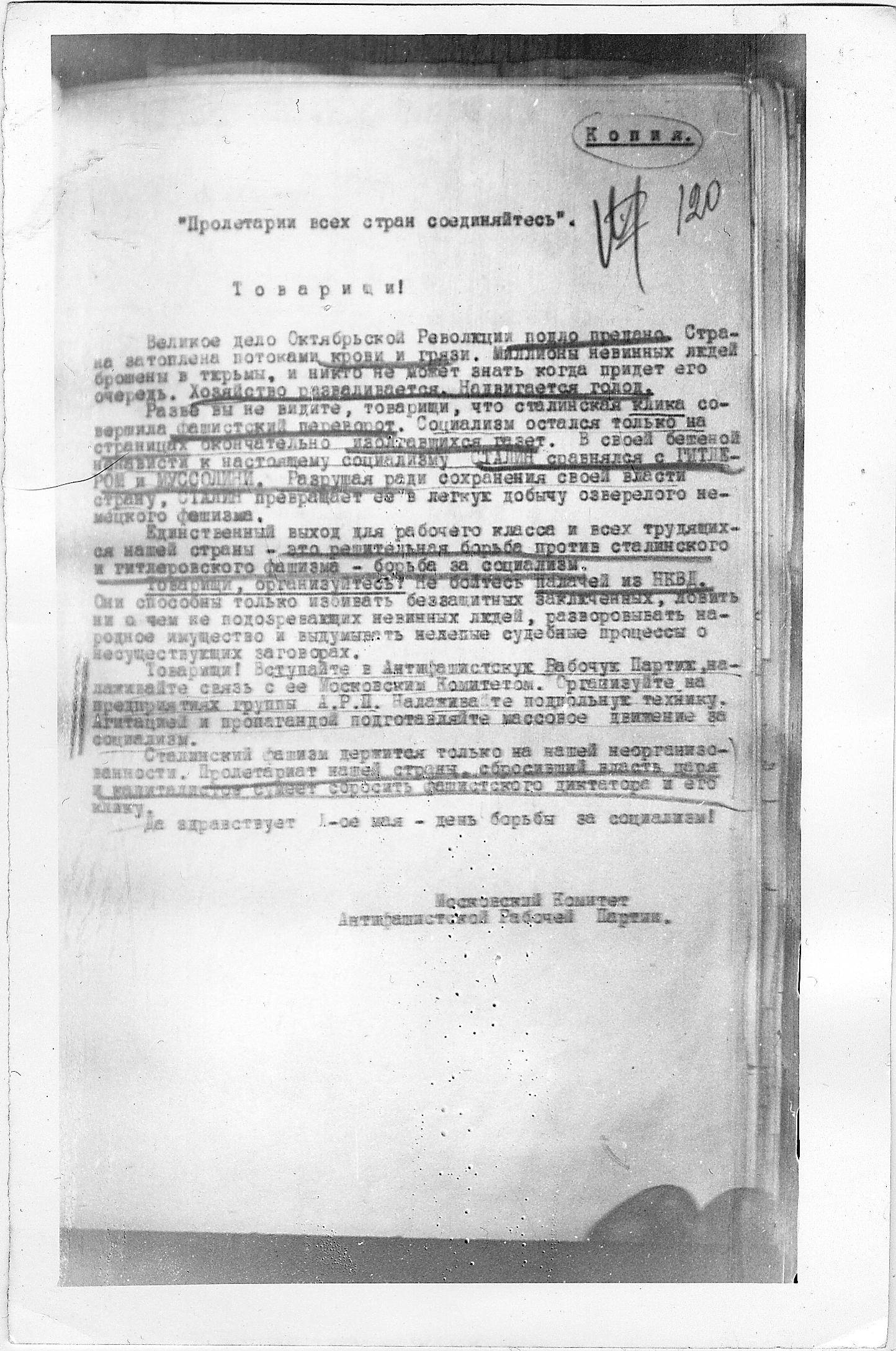
The great cause of the October Revolution has been basely betrayed. The country is flooded with streams of blood and filth.
Amid the horrors of a war that more than once laid waste his small but dearly loved homeland, in the fire of blazes that destroyed his last possessions, amid the deaths of people close and dear, burdened with a large family, cast down by the grave illness of his beloved companion, bending under the blows of want and hunger, the forgotten organist of a provincial church, the great Johann Sebastian Bach, made his mighty immortal works, full of joy and of praise of life, which for hundreds of years wake in people’s souls a vigor, a striving toward what is great, and a boundless love of all-conquering life.
I have done a Jew’s duty,
Having told you, reader,
This ancient Haggadah.
Because in our time
A Black man, a Frenchman, a Chinese, a German,
An Ethiopian, an Indian, a Dane —
All are a little bit Jews.
So it is better to howl like a wolf in freedom,
Better to be a stone in the field,
Than to see such dreams.
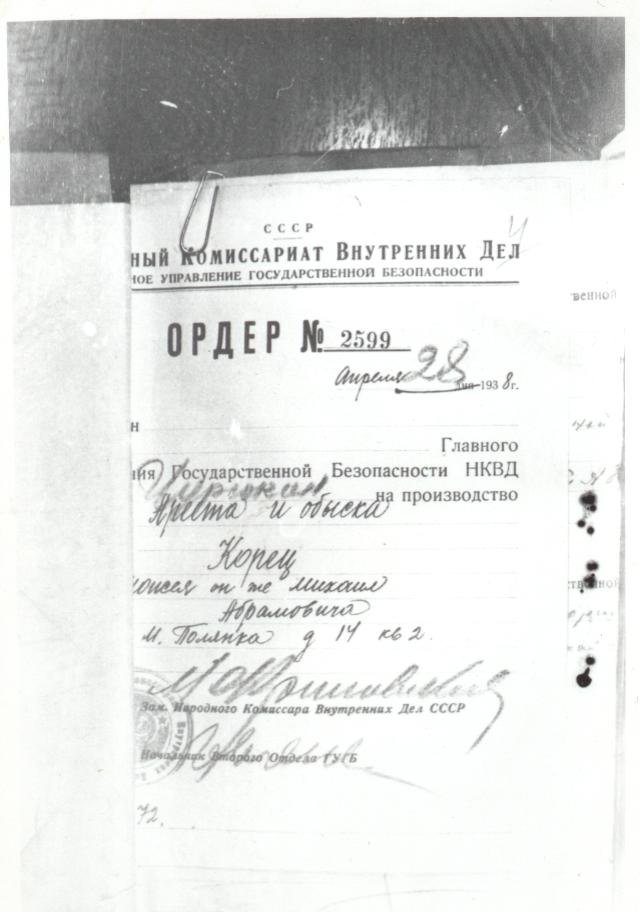
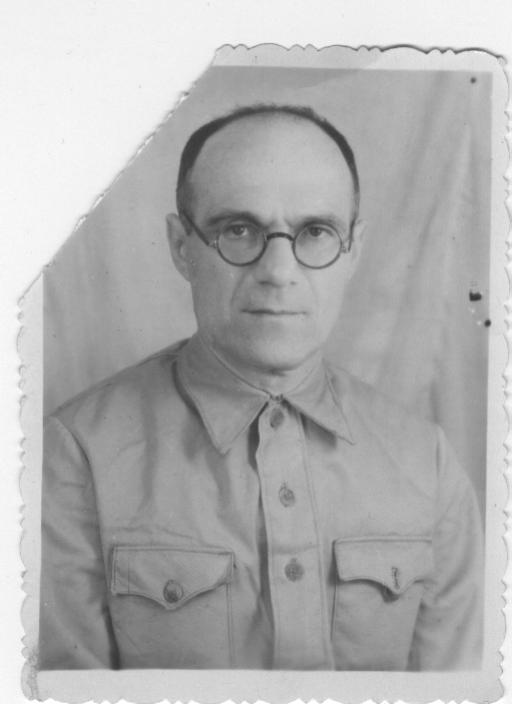
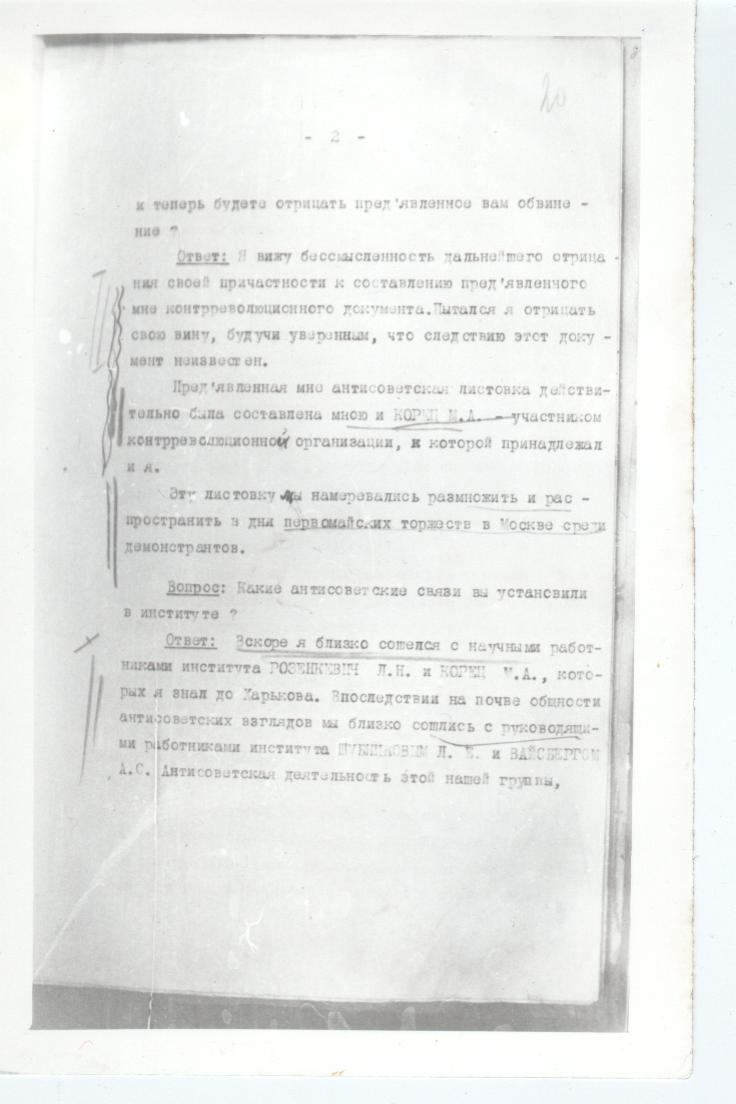
On 27 April he was arrested together with Landau and Yuri Rumer. A military tribunal gave him ten years2). Fourteen years passed in the camp. On 18 March 1952, an amnesty; until 1958, exile in Inta3).
Yes, I know it. This is the handwriting of the physicist M. A. Korets, whom I know well.
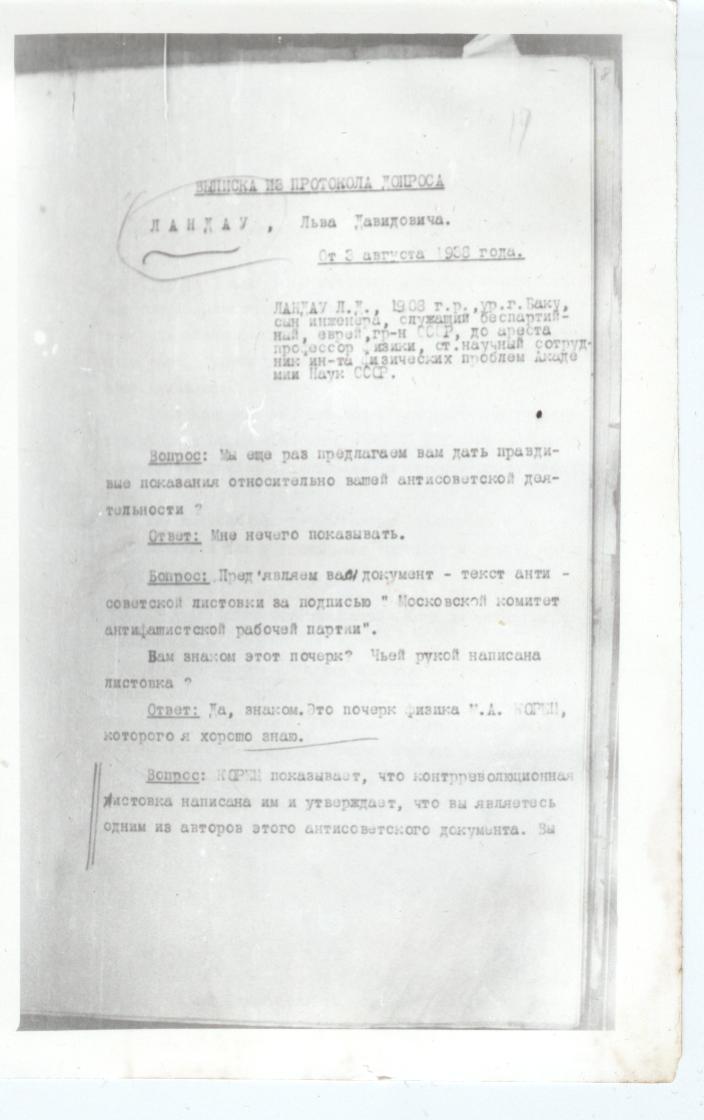
The anti-Soviet leaflet shown to me was indeed composed by me and by M. A. Korets.
The eldest daughter, Irina, was born in 1929. In her passport she wrote her name as Esfir. He wrote to her from the camp: he had not seen her for four years.
The middle daughter, Galochka. On 26 April 1945, from Mezhog: he does not know whether she is alive, or where she is4).
The third, Natasha, was born in the camp at the beginning of 1946. Her mother is Serafima Iosifovna Rudova*. Natasha’s husband is the physicist Yuri Abramovich Golfand.
Landau wrote to the military prosecutor’s office: Korets “had shown himself to be a capable young theoretical physicist”5). In the 1938 case rehabilitation was refused. It was granted after his death6).
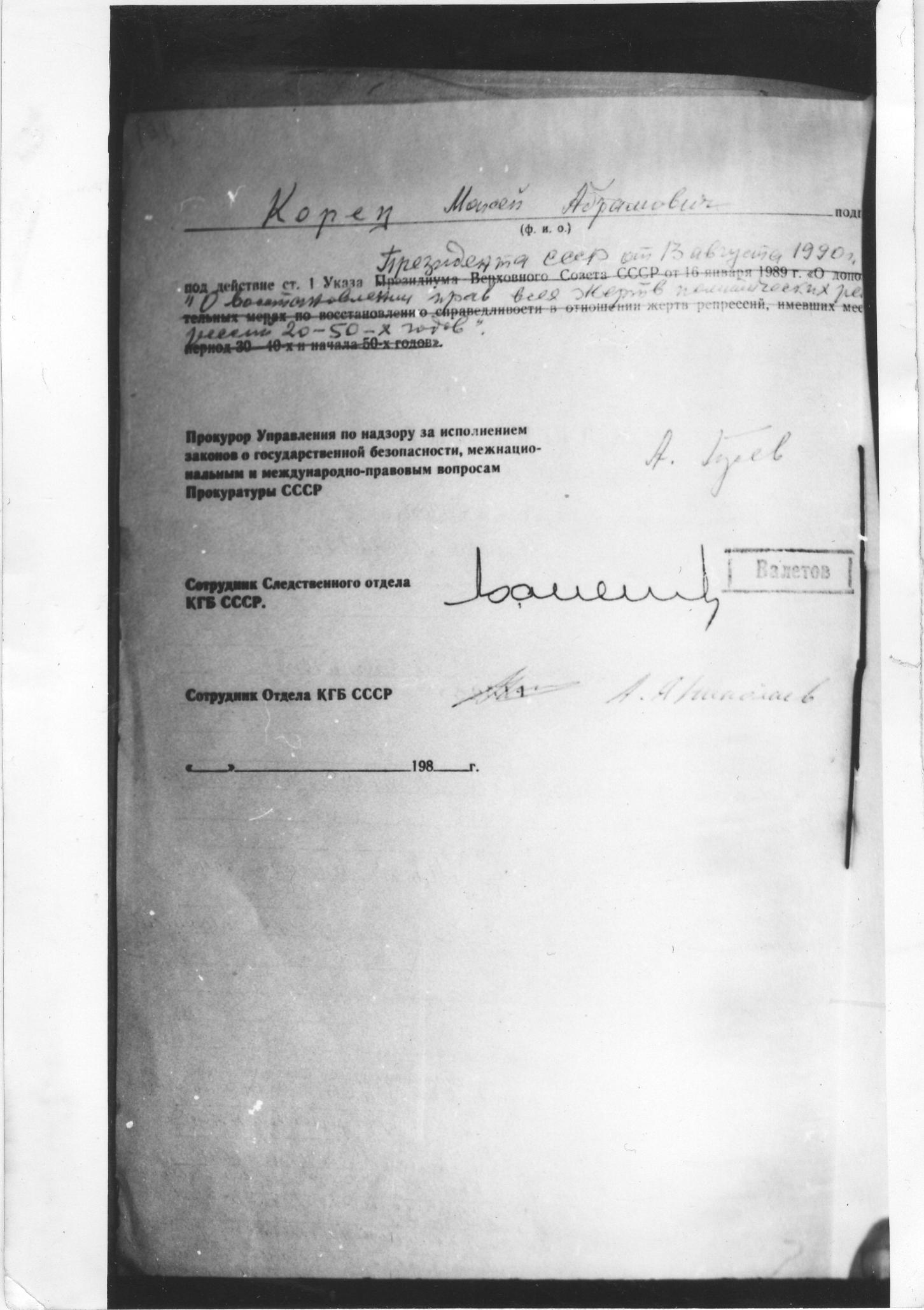
He died on 19 February in Moscow. The yahrzeit is 16 Adar I 5744. The family left in 1990. He did not live to see that day.
The case and the letters
The lists of sections lie inside each case.
Photographs
Sources
A mark in the text leads here. The same mark returns to the sentence. A title leads to the paper or to the publication.
- 1) Landau’s letter to Balitsky, 31 December 1935. “The closest collaborator.”
- 2) The indictment and the trial. Ten years under article 58, points 10 and 11.
- 3)* Natasha’s memoirs. Exile in Inta, senior engineer of the power network at Intaugol. Serafima Iosifovna Rudova; Natasha was born in the camp.
- 4) Letter to Shura, 26 April 1945, from Mezhog. Of Galochka he writes that he does not know whether she is alive, or where she is.
- 5) Landau’s letter to the military prosecutor’s office, 1956. “Had shown himself to be a capable young theoretical physicist.”
- 6) Rehabilitation. Decree of 13 August 1990.
- 7) M. Korets, Z. Ponizovsky. “Why is the Moon not made of cast iron?”, Kvant, 1972, no. 4.